A Lombok garden

ꦩꦼꦩꦪꦸꦲꦪꦸꦤꦶꦁꦧꦮꦤ

Mark & Sopantini Heyward

On 27th June 2024, a delegation from the conference of the International Small Island Studies Association visited the Studio garden. We were delighted to host the visit of gardeners from small islands across the planet: from Europe, Asia, Africa, Australia and the Americas.

A Lombok garden

The vision

To beautify this beautiful world: The Javanese philosophy of memayu hayuning bawana loosely translates as ‘to beautify a beautiful world’. This is Sopantini’s heritage and her duty.

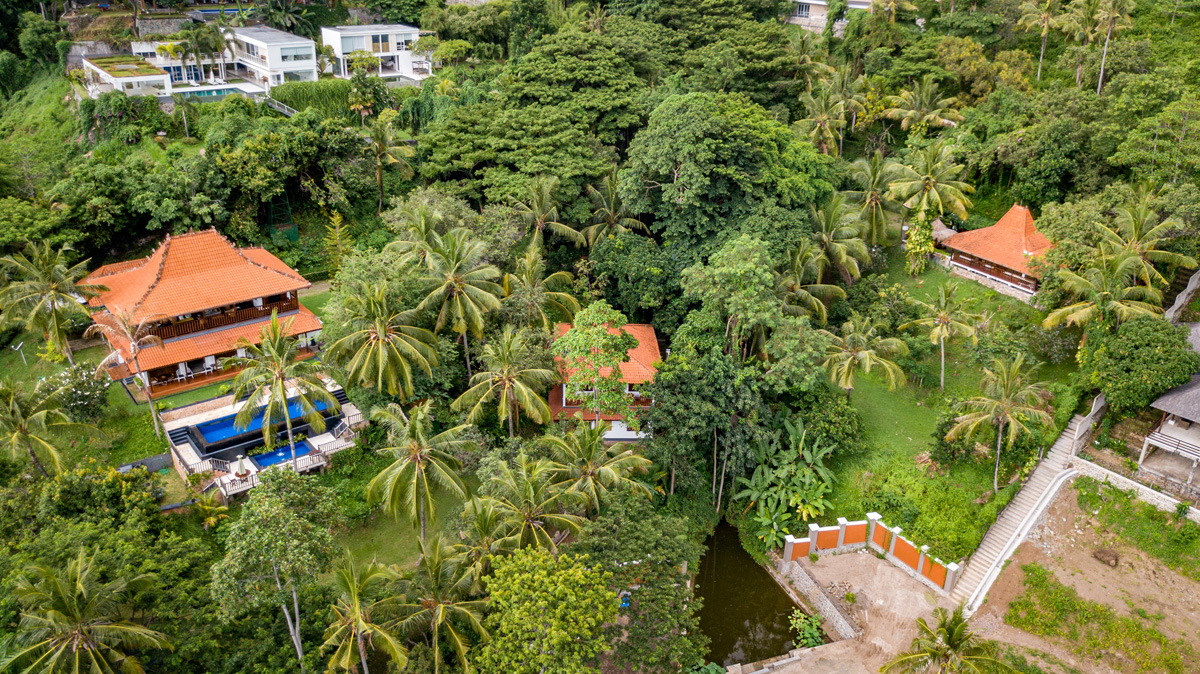
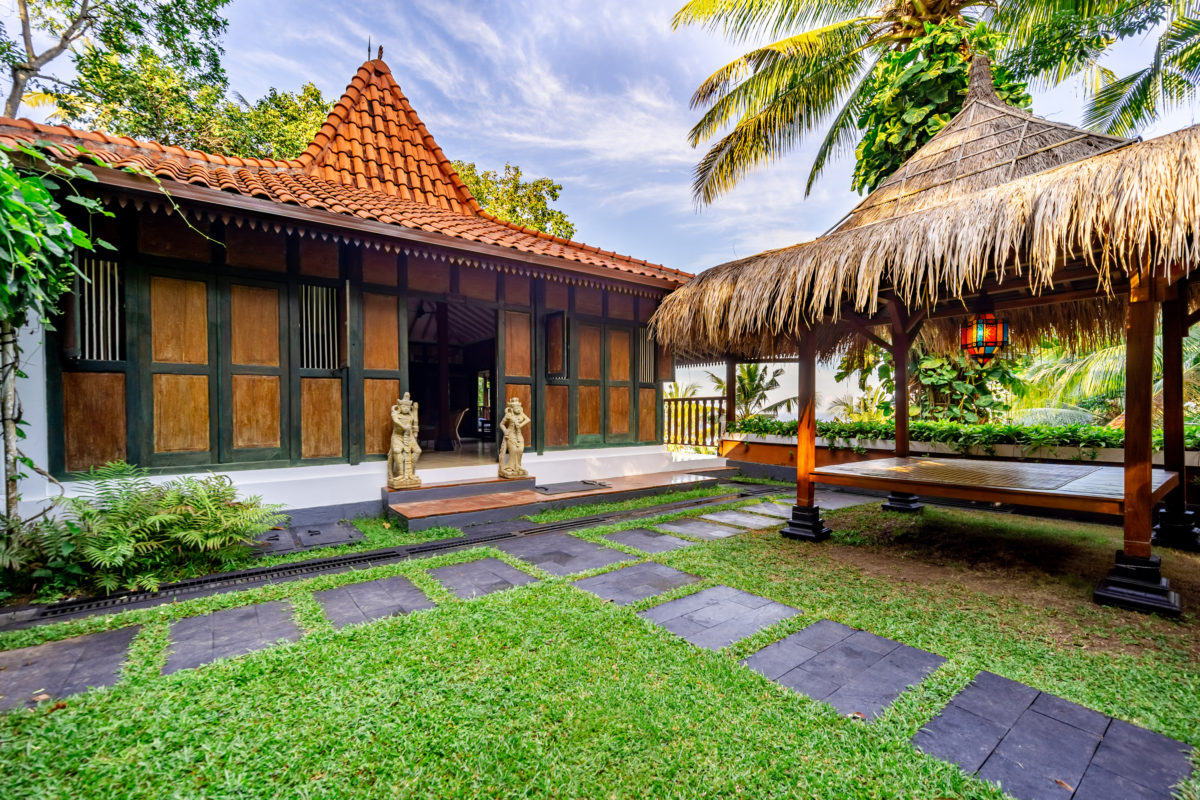
An Australian-Indonesian couple with a young family, in December 1999 we moved from Jakarta to the island of Lombok, east of Bali. The island is surrounded by warm seas; to the west is Lombok Strait and to the east, Alas Strait, to the north is the Java Sea, and to the south the Indian Ocean. In January 2001 we began acquiring land on what is now known as The Hill, or Bukit Batu Layar, on the coastal hills of West Lombok. In early 2008 we started designing our one-hectare garden, and building a traditional Javanese home and guesthouse, The Studio. In December 2009 we moved in. That story is detailed in Mark’s book, The Glass Islands, a year in Lombok (Heyward, 2023).

The Studio garden was envisaged as a healthy and attractive blend of ornamental and productive planting, a green refuge. When we began, there was no road, no water, no electricity. But, while the environment looked natural, as if plants had randomly self-seeded with no design, no intent, in fact the entire hill was, and is, a garden, a farm or a plantation. To those who know, among the weeds and saplings, most plants have a purpose; most trees have been planted by someone at some time with that purpose in mind. Our block is a small high valley, dissected by a seasonal creek, and with stunning views across Lombok Strait to Mount Agung on Bali. When we began, the block was already populated with large trees, shrubs, and coconut palms.

A Lombok garden

Planning the garden

Our strategy was to leave the landscape as it is, in broad outline, to preserve the palms and large trees, and to enhance it by cutting and pruning, by creating open lawns, pathways and outdoor rooms, bordered by hedges, trees, changes in levels. The intention was to make the garden more productive and, at the same time, more beautiful. We set out to do this by adding fragrant frangipani, cempaka / magnolia, and kananga / magnolia, and by planting fruit trees: avocado, mango, mangosteen, rambutan, soursop, guava, jackfruit, and the Papuan matoa; and a modest grove of citrus: potent little dark-green limes, sweet mandarins, and huge grapefruit-like pomelo, known as jeruk Bali. Existing fruit trees included tamarind, jackfruit, coconut, and wild mangos.

The plan was simple enough. It mainly involved leaving everything where it was, the large fruiting duwet / Java plum trees that lined the borders above and below, the huge fig tree with its dangling aerial roots, the buttressed rainforest giants that cluster along the creek, the tall coconut palms, the sugar palm that we tapped for palm wine and red sugar, the towering stands of bamboo, and the row of deciduous banten (Lannea coromandelica) that marked the western border. Rather than designing a landscape, it was more a matter of filling in the details – a traditional statue here, a lawn and a bank of ferns here, a hedge of miniature bamboo there, a flowering frangipani, or a fruit tree or two over there.

We decided on a very plain colour scheme for the garden. Avoiding the wild tropical colours, the shocking pinks and purples, the flaming reds and oranges – and sticking to a simple palate of whites and pale creams as occasional highlights in the green – creates a cool, calm and peaceful effect. Visits to the botanical gardens of Singapore, Bali and West Java provided inspiration. The English landscape traditions of Capability Brown and his eighteenth-century friends translate well into the tropical gardens and parks of Singapore and Malaysia, creating an equatorial idyll that contrasts with the more common Dutch-influenced gardens of Indonesia, with their trimmed hedges, geometric designs and lagging maintenance, a seemingly futile attempt to impose order on South-East Asia’s unruly natural environment.

A Lombok garden

Creating the garden

The bones of the plan were in place, the big trees, the creek, the shape of the land and position of the buildings. We shored up terraces with thick rows of smoky green sereh / lemon grass, which stabilize the land, repel mosquitoes and are useful in the kitchen. Access roads became avenues of raintrees. Papaya and banana were planted like giant vegetables where they blend in with massed plantings of the birdlike flowering heliconia, ginger, tumeric, galangal, hibiscus, moringa (kelor), and stray acacia saplings. Broad-leaved monstera run up coconut palms. White flowering bougainvillea climb along the fences. Pergolas are hung with thunbergia, markisa / passionfruit and bangkwang or bengkuang yam vines, banks are filled with local ferns: maidenhairs, sword ferns, Java ferns – and retaining walls are painted with Balinese terracotta and softened with epiphytic ferns and creeping figs.

A Lombok garden

Inspired by Permaculture

While Mark was largely responsible for the initial design, Ibu Sopan chose the fruit trees and is now responsible for developing our productive, permaculture-inspired garden – using a local and microbial approach. We like to call the approach ‘natural farming’, where soil, plant microbes, organic matter, fruit trees and field crops, livestock, water, fish, and other creatures are integrated.

As the garden matured, Sopan invested in the soil through the proliferation of beneficial indigenous microorganisms, sustaining their growth and population, and creating what we call ‘living soil’ minimally tilled, inoculated with microorganisms and occasionally sprayed with biological nutrients from local herbs and weeds. We did not begin with healthy soil.  Since adopting this approach, we now have a much healthier soil.

After admiring the native plants such as gadung and suweg, the second of which emerge in the wet season and occasionally produce large Rafflesia-like flowers which smell like rotting meat around sunset, Sopan began experimenting with mass plantings of porang, the ‘elephant foot yam’ which produces the highly valued konjak (Amorphophallus konjac). We then began to raise free-range chickens. Our healthy chickens grow without antibiotics or vaccines and are fed only once a day with our farm-based produce, including worms and the rich-in-protein, black soldier fly larvae, which we produce on site. We farm a special colony of the flies, which thrive on the organic waste produced either from our own garden and kitchen – or from the local market including the fish market and fruit shops. We now use the natural farming approach not only for raising healthy, odour-free chickens, but also to grow vegetables in raised garden beds.

Creating healthy soil

Apart from the existing local plants which we discovered are good for restoring soil fertility due to high concentrations of nitrogen in their leaves, we planted avenues of raintrees, a giant legume – and a nitrogen fixer. The leaves make excellent compost material. We planted them without much knowledge about their use for soil restoration, though we did know that the leafy canopy would provide us with shade.  These large, fast-growing trees, also known as munggur or trembesi, are abundant in and around graveyards, roadsides, and rice fields on the island of Java. Now one can see many of these trees in Lombok too. Their nitrogen-rich leaves help restore soil fertility. Mixed with cow dung taken from our shed, we also make compost, another way to engage in soil fertility restoration. We are very proud of our circular system in which there is no waste we cannot make use of, even the manure produced by our cows and goats is used as a feed for our worms, fallen or felled trees provide timber for construction, and catfish feed on runoff in the dams.

As Ibu Sopan’s knowledge about soil improved, we learned about the traditional wisdom and post-rice-harvest practices, in which unused rice straw is burnt to produce ash and biochar. The practice has been shown to be more sustainable than that established during the government’s rice intensification programme in 1970’s when chemical fertilizers gained popularity among farmers across the country, including those in a small island like Lombok (Komatsuzaki & Syuaib, 2018).

senggigi-land-sale

Organic and productive

We don’t use chemical fertilizers or pesticides in our garden. We observe that our plants are generally healthy with very minimal pests, although we are yet to be totally free of plant diseases.  We use the leaves of nimba / neem trees (Azadirachta indica) to make a tea, which, sprayed onto the leaves of ornamental plants, is an effective treatment for white fly.

Our small orchard produces a range of different tropical fruits, ranging from those with acidic to sweet tastes and everything between. Sirsak / soursop with its deliciously tangy flesh is very good for making juices. We routinely harvest coconuts. Our mangoes are not to be missed either. The local olive-size fruit called Java plum (jot or duwet in Javanese) is good for making jam, although the harvesting and jam-making processes are very time-consuming and labour-intensive.

A Lombok garden

What next?

Although, at this stage, our soil is getting richer with organic matter, much of it from its own trees and our own chicken and cow dung, we still face challenges.  Protecting the fruit from monkey attacks is a continuing struggle. A troupe of around one-hundred macaques has taken up residence in the valley. Occasionally a python or a monitor lizard raids the chicken pen or the fish dam. Our complex water system, which includes bore water, harvested rainwater, and recycled wastewater (using a natural reedbed system) requires constant maintenance. The garden requires constant attention, cutting and pruning as the fast-growing tropical vines left alone will smother trees and eventually kill them. Occasional earthquakes threaten to damage infrastructure, and big rain events sometimes cause landslips. This year, the long dry season stressed some of the plants, but our garden survived well.

A Lombok garden

A home to nature

As well as being productive and ornamental, the garden is home to a diverse community of native creatures; butterflies, birds, bats, reptiles, insects and small mammals. By creating a refuge, providing water, avoiding the use of chemicals, and planting the species that butterflies and birds need, we are starting to see a resurgence of life. The challenge now is to learn how to balance it all. The answer may be to encourage diversity, to create an ecosystem, to have faith in nature to find its own balance and harmony, its own beauty. And, following the memayu hayuning bawana philosophy, it is our responsibility and our pleasure to do what we can to cultivate and enhance that beauty.


References

Evan, M. (2021). The Incredible Story of What Keeps the Earth and us Healthy. Australia: Murdoch Books.

Heyward, M. (2023). The Glass Islands, a Year in Lombok. UK: Monsoon Books.

Komatsuzaki, M. & Syuaib, M.F. (2010). New Farm Management Strategy to Enhance Sustainable Rice Production in Japan & Indonesia. Chapter 14. Sustainable Agriculture and New Biotechnology. CRC Press: USA. Taylor & Francis Group

Mollison, B. & Holmgren, D. (1978). Permaculture One: A Perennial Agriculture for Human Settlements. Australia: Melliodora Publishing.

Yayasan IDEP & Permatil. (2006). Buku Panduan untuk Permakultur: Menuhu Hidup Lestari: Permatil Yayasan IDEP


The writers

Sopantini, S.Pd., Grad Cert, M Ed, D.Ed.

A proud Indonesian woman from the island of Java, passionate educator, gardener, and small business owner, Sopan moved with her family to the island of Lombok in 1999.

Mark Heyward, BA, Dip Ed, M Ed Stud, PhD,

From Tasmania, Australia. An islander, education consultant, author, and occasional musician. Mark is married to Sopan and father to their two children.

See our other Articles

The Glass Islands
 

The Glass Islands

The Glass Islands, a year in Lombok, is published by Monsoon Books, a UK-Singapore-based publishing house. Released in September 2023, this is Mark’s second book about Indonesia. Mark is one of the owners of The Studio – and the book is all about how he and his wife, Ibu Sopan, developed the Hill and designed and built the Studio!

The book was presented at the Ubud Writers and Readers Festival in October 2023, and launched at community events in Senggigi on November 3rd and in Hobart on December 14th. It was exactly ten years after the launch of Mark’s first book, Crazy Little Heaven, an Indonesian journey, which was described by veteran Australian journalist, Tim Bowden, as “the best book on Indonesia I have read.”

Read more
Get in touch

Our team is on hand to offer assistance and answer any questions.

The Studio Lombok
Jalan Lembah, no.12.
Bukit Batu Layar
West Lombok, Indonesia, 83355

thestudio.lombok@gmail.com +628123758840 Book now
Translate »